Wednesday, 16 September 2009

"Enter password for default keyring to unlock"

Every time I change my Ubuntu machine's password, I fall into this trap - when Ubuntu tries to get at the default keyring to access the key for my wireless network, it tries to use the NEW OS password to access the keyring, and throws up this error: -

Enter password for d
efault keyring to unlock

This occurs because the keyring has been locked with the old OS password.

The solution ?


  1. Choose Applications -> Accessories -> Passwords and Encryption Keys ( or simply run the command seahorse )
  2. Navigate to the Passwords tab
  3. Select the Passwords: login link
  4. Click the right mouse button
  5. Choose Change Password
  6. Enter the OLD OS password
  7. Enter the NEW OS password - twice
  8. Click the Change button
  9. Close the Passwords and Encryption Keys applet

Hmmmmmmmmm, Mapalicious

Thanks to the power of Twitter, I just came across this: -

IBM Custom Content Assembler

Have you ever wished you could customize the information that comes with a product?

This application provides you with the unique ability to create custom documents by selecting the information you want to keep. Once you are done customizing you can output a PDF or HTML file that only includes the information you select ...

https://info2.lotus.com/mapalicious/home

Includes DAOS for Notes and Domino 8.5, Lotus Quickr Services for Lotus Domino 8.2 and Lotus Sametime Advanced 8.0.1.

Tuesday, 15 September 2009

Problems with 32-bit Lotus Forms Server API on 64-bit JVM

A few months back, I blogged about my experiences with Lotus Forms 3.5 and WebSphere Portal 6.1 together.

During that project, I hit a related problem whereby we were unable to get the sample portlets to render properly - we were attempting to render a portlet from a remote Webform server.

To cut a long and painful (!) story short, the problem was that we were trying ( unbeknown to me ) to run the Java APIs on a 64-bit JVM. Given that the Java byte code interacts with some native OS binaries, this was never going to work.

The key message ( in SystemOut.log ) was: -

Did not realize init() exception thrown by servlet Translator: java.lang.UnsatisfiedLinkError: pe_cc (/usr/lib/libpe_cc.so: wrong ELF class: ELFCLASS32.)
at java.lang.ClassLoader.loadLibraryWithPath(ClassLoader.java:981)
at java.lang.ClassLoader.loadLibraryWithClassLoader(ClassLoader.java:950)
at java.lang.System.loadLibrary(System.java:453)
at com.PureEdge.DTK.<clinit>(Unknown Source)
at java.lang.J9VMInternals.initializeImpl(Native Method)
at java.lang.J9VMInternals.initialize(J9VMInternals.java:194)

This Technote: -


describes a similar symptom.

The solution - it's not possible to use the Lotus Forms Server products on a 64-bit JVM - this MAY change in a future release, but it ain't going to work in the short-term.

Wednesday, 9 September 2009

Again, Google has the answer, Google is my friend ...

Whilst installing Sametime 8.0.2 onto Domino 8.0.2 on one of my demo machines, I kept hitting this error: -
The install detected that the Domino server ID is password protected. This password is required to complete the Sametime server configuration. Enter the password, and choose Next to validate the password.
I've not seen this before - I even tried setting a password on the offending ID file ( \Lotus\Domino\data\server.id ) using a Notes 8.5 Basic client, but to no avail.

As always in these situations, a quick Google search brought up Dan Silva's blog post: -

http://dansilva.org/2008/01/help-needed-sametime-8-server-installer-says-serverid-has-a-password.html

which recommended setting an environment variable - STSkipDominoPasswordCheck=true - to force the installer NOT to check for a password.

I did this and restarted the ST installer and .... it worked like a dream.

It's also worth noting that I could have achieved the same objective by starting the installer with a command line switch: -

\temp\sametime\Server\setupwin32.exe -V STSkipDominoPasswordCheck=true

Perhaps I'll try this next time ...

Friday, 4 September 2009

Portal V6.1 Performance Tuning Open Mic Call on September 23, 2009

I saw this notification via an internal email last week, but have also seen it announced via a more modern channel - Twitter - via the PortalSupport account ( http://twitter.com/PortalSupport ).

For more details on the Tuning call, please go here: -

Thursday, 3 September 2009

Obsession ( no, not the bloomin' perfume from Marks and Spencer )

Those of you who knows me, or follow me on Twitter, may have noticed
that I have been inordinately obsessed with a particular subject this
past few months - no, not WebSphere, not even coffee, not even driving
my MC topless, I'm talking about Battlestar Galactica.

Having just finished the fifth season of the show ( which is frakkin'
A-W-E-S-O-M-E ), I've been Googling around for related content,
including a certain Mr Hendrix playing "All Along the Watchtower" and
a certain Mr Glass with "Metamorphosis: One".

Today, I found the mother lode here: -


I don't think it contains any spoilers, but it'd help to have watched
all/some of the show before watching this clip ...

Enjoy

Rational Application Developer 7.5 - Portal Toolkit in five parts

A nice set of five articles showing how the Portal Toolkit in Rational Application Developer 7.5 works: -

This article is the first in a five-part series. It provides an overview of the new features of IBM Rational Application Developer Version 7.5 Portal Toolkit. Because this overview deals with the enhancements made since the previous version, knowledge of Rational Application Developer V7.0 is very useful, although not mandatory. 


IBM WebSphere Portal Version 6.1 introduces new features, such as client-side aggregation, Friendly URLs, and static page aggregation. WebSphere Portal V6.1 provides new themes, which include a Web 2.0-based theme. IBM Rational Application Developer Version 7.5 provides the tooling support for these new features. This article describes these features and tools.


This article describes the Web 2.0 tooling support introduced in IBM Rational Application Developer Version 7.5 for portlet and portal applications running on IBM WebSphere Portal Version 6.1 and higher. To help you understand this tooling support better, the author also discusses the basics and benefits of the Web 2.0-based technologies.


With static page aggregation, you can create portal pages from static HTML layouts or templates in an IBM WebSphere Portal Version 6.1 project. This article guides you through the step-by-step process of creating, designing, customizing, and aggregating such static layouts by using IBM Rational Application Developer Version 7.5, targeting the portal server runtime environment. You do not need to know a lot about the underlying portal APIs to follow the steps in this article.

This article walks you through the creation of a sample JSR 286 basic portlet application using the Portal Toolkit in IBM Rational Application Developer Version 7.5. In the process, it explains how the Portal Toolkit expedites the whole process to leverage these capabilities. Detailed instructions show how to enable events and public render parameters by using the new event wizard and the enhanced portlet deployment descriptor visual editor.


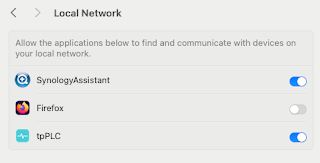
Note to self - Firefox and local connections

 Whilst trying to hit my NAS from Firefox on my Mac, I kept seeing errors such as:- Unable to connect Firefox can’t establish a connection t...