As an aspirationally regular listener to Mark Kermode's Film Reviews, aka @Wittertainment, on BBC Radio 5 Live, albeit via the podcast version, I wanted to draw your attention to: -
(a) the podcast - if you don't listen to it, and you ever watch movies, then you really really really ought to have a listen
(b) the Wittertainment Code of Conduct
The latter is a thing of beauty - if you have ever been annoyed by mobile-phone using, popcorn-eating, soda-slurping, talking, kicking, giggling so-called movie-watchers, then you need to print this out, laminate it and then distribute it freely and widely.
Lovely :-)
PS Hello to Jason Isaacs
Geeking in technology since 1985, with IBM Development, focused upon Docker and Kubernetes on the IBM Z LinuxONE platform In the words of Dr Cathy Ryan, "If you don't write it down, it never happened". To paraphrase one of my clients, "Every day is a school day". I do, I learn, I share. The postings on this site are my own and don’t necessarily represent IBM’s positions, strategies or opinions. Remember, YMMV https://infosec.exchange/@davehay
Thursday, 20 January 2011
Going to Lotusphere 2011 #LS11 ? If so, you NEED to order some of these ...
Keith ( aka @LotusEvangelist ), being a true Lotus Evangelist, has written an XPages application to host a website with the honourable purpose of showcasing a yummy Lotusphere-themed treat; Girl Scout Cookies.
No, before you ask, I'm told that they are not made with real Girl Scouts; they are, however, made by a troupe of .... Girl Scouts ( aka Brownies, apparently ).
Not sure what you get if you mix cookies and Brownies ....
Anyway, here's the app -> http://noffiya.com/gscookie.nsf <- and here's Keith doing a much better job of describing the treat.
I've ordered mine, and am hoping that the lovely @dilftechnical can deliver them - assuming that her hold luggage is large enough to cope with all of these orders :-)
No, before you ask, I'm told that they are not made with real Girl Scouts; they are, however, made by a troupe of .... Girl Scouts ( aka Brownies, apparently ).
Not sure what you get if you mix cookies and Brownies ....
Anyway, here's the app -> http://noffiya.com/gscookie.nsf <- and here's Keith doing a much better job of describing the treat.
I've ordered mine, and am hoping that the lovely @dilftechnical can deliver them - assuming that her hold luggage is large enough to cope with all of these orders :-)
Monday, 17 January 2011
From @LotusEvangelist - Lotus Connections 3 - Problems with TDI Updates
My pal Keith has blogged an interesting little problemette here, seen whilst trying to apply an update to IBM Tivoli Directory Integrator v7.
Unlike me, Keith is using Windows, but I don't hold that against him :-)
Bottom line, if the applyUpdates.bat script fails, try extracting the update to a root directory e.g. E:\tdi-update-70006.
For a more detailed explanation, read Keith's post.
Unlike me, Keith is using Windows, but I don't hold that against him :-)
Bottom line, if the applyUpdates.bat script fails, try extracting the update to a root directory e.g. E:\tdi-update-70006.
For a more detailed explanation, read Keith's post.
Ubuntu 10.10 on Lenovo Thinkpad W500 - Problems with Suspend
Following an earlier problem with suspend/resume, I seem to have picked up another problem since a kernel update over the weekend.
Following the update, I'm now on 2.6.35-25-generic-pae and, sadly, since then, my laptop doesn't suspend, regardless of whether I choose the Suspend option from the menu, close the lid or hit [Fn]+[F4].
I even tested using the command sudo pm-suspend but got the same issue.
The screen flashes to black, the crescent moon suspend indicator blinks on and off and, after 5-10 seconds, the display restores precisely to where it was before.
I even tried manually switching off the network and Bluetooth adapters, using the small switch at the front-left side of the keyboard, and also checked that I had no USB devices plugged in.
I noticed that I did see messages relating to: -
PM: Device 00:0a failed to suspend: error -5
PM: Some devices failed to suspend
in one of the virtual terminals, which gave me a potential helping hand, and led me to this page.
In essence, it appears that the kernel change has affected the way that a kernel module - tpm_tis - should be loaded. Apparently, TPM is part of the Trusted Rights Platform, and appears to relate to encryption, which is nice.
To cut a long story short, there are three inter-dependant modules that are loaded at boot-up: -
tpm
tpm_bios
tpm_tis
When the third module - tpm_tis - is loaded, it needs to have a parameter - itpm=1 - added as follows: -
sudo modprobe tpm
sudo modprobe tpm_bios
sudo modprobe tpm_tis itpm=1
I proved this by comparing the results of this set of commands: -
sudo rmmod tpm_tis tpm t
sudo modprobe tpm
sudo modprobe tpm_bios
sudo modprobe tpm_tis
sudo pm-suspend
with this: -
sudo rmmod tpm_tis tpm t
sudo modprobe tpm
sudo modprobe tpm_bios
sudo modprobe tpm_tis
sudo pm-suspend itpm=1
In the first case, suspend failed - in the second case, it worked as one would expect.
So, as a permanent ( I hope ) solution, I've created a new configuration file: -
/etc/modprobe.d/tpm.conf
into which I've placed: -
options tpm_tis itpm=1
Now, following a reboot, I'm pleased to report that suspend and, perhaps equally importantly, resume both work.
I'm hoping this'll be fixed in a future release, but my circumvention ( aka hack ) seems to work.
Following the update, I'm now on 2.6.35-25-generic-pae and, sadly, since then, my laptop doesn't suspend, regardless of whether I choose the Suspend option from the menu, close the lid or hit [Fn]+[F4].
I even tested using the command sudo pm-suspend but got the same issue.
The screen flashes to black, the crescent moon suspend indicator blinks on and off and, after 5-10 seconds, the display restores precisely to where it was before.
I even tried manually switching off the network and Bluetooth adapters, using the small switch at the front-left side of the keyboard, and also checked that I had no USB devices plugged in.
I noticed that I did see messages relating to: -
PM: Device 00:0a failed to suspend: error -5
PM: Some devices failed to suspend
in one of the virtual terminals, which gave me a potential helping hand, and led me to this page.
In essence, it appears that the kernel change has affected the way that a kernel module - tpm_tis - should be loaded. Apparently, TPM is part of the Trusted Rights Platform, and appears to relate to encryption, which is nice.
To cut a long story short, there are three inter-dependant modules that are loaded at boot-up: -
tpm
tpm_bios
tpm_tis
When the third module - tpm_tis - is loaded, it needs to have a parameter - itpm=1 - added as follows: -
sudo modprobe tpm
sudo modprobe tpm_bios
sudo modprobe tpm_tis itpm=1
I proved this by comparing the results of this set of commands: -
sudo rmmod tpm_tis tpm t
sudo modprobe tpm
sudo modprobe tpm_bios
sudo modprobe tpm_tis
sudo pm-suspend
with this: -
sudo rmmod tpm_tis tpm t
sudo modprobe tpm
sudo modprobe tpm_bios
sudo modprobe tpm_tis
sudo pm-suspend itpm=1
In the first case, suspend failed - in the second case, it worked as one would expect.
So, as a permanent ( I hope ) solution, I've created a new configuration file: -
/etc/modprobe.d/tpm.conf
into which I've placed: -
options tpm_tis itpm=1
Now, following a reboot, I'm pleased to report that suspend and, perhaps equally importantly, resume both work.
I'm hoping this'll be fixed in a future release, but my circumvention ( aka hack ) seems to work.
Mobile LS11 Goodness - Lotusphere 2011 Scheduler - on the Android ... and the iPhone and the BlackBerry
W00t, my IBM colleague, Jo Grant, has created a neat little application for the Android device, Lotusphere 2011 Scheduler, as per this write-up here: -
This application is a simple resource to help you organize your Lotusphere 2011 schedule and get you to the events you need to go to. The data is driven by the wonderful database created by the folks at www.geniisoft.com
The main screen lists the events of Lotusphere 2011. There are rather a lot! To make it more manageable, you can access the menu to sort or filter this view by a number of criteria. Additionally, events that are taking place today will have their time backlight in light blue. Events that are taking place now will have their time backlight in blue. Events that you have liked will be backlight in green.
Selecting the code for an event brings you to the even screen. This gives full details and a map to the event's location.
If the schedule changes, we'll attempt to wrap that up in a new version. Check the Android Marketplace for an update as we get closer to the event.
This application was written by Jo Grant. Although an IBM employee, this is not an official application provided by IBM or the Lotusphere team.
Any faults or problems caused by this application are not IBM's responsibility. Blame Jo :-)
Jo will be at Lotusphere in the Solutions Development Lab. Drop by and say hello!
For those reading this on the Android itself, here's a direct link to the app in the Android Marketplace.
This is in addition to the most excellent apps that The Turtle Partnership have released for the iPhone and BlackBerry platforms.
This application is a simple resource to help you organize your Lotusphere 2011 schedule and get you to the events you need to go to. The data is driven by the wonderful database created by the folks at www.geniisoft.com
The main screen lists the events of Lotusphere 2011. There are rather a lot! To make it more manageable, you can access the menu to sort or filter this view by a number of criteria. Additionally, events that are taking place today will have their time backlight in light blue. Events that are taking place now will have their time backlight in blue. Events that you have liked will be backlight in green.
Selecting the code for an event brings you to the even screen. This gives full details and a map to the event's location.
If the schedule changes, we'll attempt to wrap that up in a new version. Check the Android Marketplace for an update as we get closer to the event.
This application was written by Jo Grant. Although an IBM employee, this is not an official application provided by IBM or the Lotusphere team.
Any faults or problems caused by this application are not IBM's responsibility. Blame Jo :-)
Jo will be at Lotusphere in the Solutions Development Lab. Drop by and say hello!
For those reading this on the Android itself, here's a direct link to the app in the Android Marketplace.
This is in addition to the most excellent apps that The Turtle Partnership have released for the iPhone and BlackBerry platforms.
Friday, 14 January 2011
IBM Customer Experience Suite - It's Wiki'd
Whilst looking for some material on the Customer Experience Suite, I found this new (to me) post on the WebSphere Portal Wiki
IBM® Customer Experience Suite combines the essential ingredients needed to deliver exceptional, differentiated Web experiences, including Web content management, rich social and real-time communication features, search, commerce and analytics support, personalization, rich media management, mobile device support, and comprehensive integration capabilities. The net result is an agile platform that helps organizations dramatically improve their online experiences for their customers across multiple channels, leading to increased customer satisfaction, better brand awareness, and improved profitability.
Thus far, they have a whole bunch of articles, including: -
IBM Customer Experience Suite and Search Engine Optimization
IBM Customer Experience Suite and Mobile Application Delivery
Integrating the IBM Customer Experience Suite with WebSphere Commerce
Integrating the IBM Customer Experience Suite with Real-Time Web Analytics
Integrating the IBM Customer Experience Suite and SPSS Predictive Analytics
Social Software and the IBM Customer Experience Suite
Integrating the Customer Experience Suite with Rich Digital Media
IBM's vision and strategy for creating Exceptional Web Experiences
eForms and the Customer Experience Suite
Integrating the IBM Customer Experience Suite with Business Intelligence
Definitely worth bookmarking, and also subscribing to the Wiki feed.
IBM® Customer Experience Suite combines the essential ingredients needed to deliver exceptional, differentiated Web experiences, including Web content management, rich social and real-time communication features, search, commerce and analytics support, personalization, rich media management, mobile device support, and comprehensive integration capabilities. The net result is an agile platform that helps organizations dramatically improve their online experiences for their customers across multiple channels, leading to increased customer satisfaction, better brand awareness, and improved profitability.
Thus far, they have a whole bunch of articles, including: -
IBM Customer Experience Suite and Search Engine Optimization
IBM Customer Experience Suite and Mobile Application Delivery
Integrating the IBM Customer Experience Suite with WebSphere Commerce
Integrating the IBM Customer Experience Suite with Real-Time Web Analytics
Integrating the IBM Customer Experience Suite and SPSS Predictive Analytics
Social Software and the IBM Customer Experience Suite
Integrating the Customer Experience Suite with Rich Digital Media
IBM's vision and strategy for creating Exceptional Web Experiences
eForms and the Customer Experience Suite
Integrating the IBM Customer Experience Suite with Business Intelligence
Definitely worth bookmarking, and also subscribing to the Wiki feed.
Friday, 7 January 2011
WebSphere Application Server - Exploring the HTTP Headers sent from Web Server to the WAS Plugin
One of my Lotus Connections guru friends in the Netherlands had asked me about the headers that are sent from the webserver, Microsoft Internet Information Server in his case, to the WebSphere Plugin.
These are revealed when one enables tracing by setting LogLevel=“Trace” in the Plugin configuration file - plugin-cfg.xml.
He referred me to this forum post: -
IIS websphere plugin headers - Websphere
as he was specifically interested in one heading - $WSAT.
Having checked this most useful reference - Demystifying the IBM Web Server Plug-in - written by Naveen Shetty and Steve Reid from the IBM HTTP Server / WAS Plugin Support Team, I wasn't able to find that specific header, so I had to look further afield.
Thanks to some timely assistance from another IBM colleague, here are the headers explained: -
$WSAT -- The Auth Type that is being used to make this request.
$WSCC -- The Client Certificate used for this request. If value is not base64 encoded for us by the webserver then the plugin will base64 encode it before sending it across to the Application Server.
$WSCS -- The Cipher Suite that the webserver negotiated with the client. This is not necessarily the cipher suite that the plugin will use to send the request across to the Application Server.
$WSIS -- This header will be set to either 'true' or 'false' depending on whether or not the request is secure or not(came in over SSL/TLS).
$WSSC -- The scheme being used for the request. This header will normally be set to either 'http' or 'https'.
$WSPR -- The HTTP protocol level being used for this request. The plugin currently has support for up to HTTP/1.1 requests.
$WSRA -- The remote IP address of the machine the client is running on.
$WSRH -- The remote hostname of the machine the client is running on. If the hostname can't be resolved then this header should be set to the IP address.
$WSRU -- The remote user specified for the given request.
$WSSN -- The server name used for this request. This should be the value that was specified in the HOST header of the incoming request.
$WSSP -- The server port that the request was received on. This will be the port value that is used in route determination.
$WSSI -- The SSL Session ID being used for this request. If the value is not base64 encoded for us by the webserver then the plugin will base64 encode it before sending it across to the Application Server.
So here's hoping that this is of use to my Dutch pal, as well as to other out there ....
These are revealed when one enables tracing by setting LogLevel=“Trace” in the Plugin configuration file - plugin-cfg.xml.
He referred me to this forum post: -
IIS websphere plugin headers - Websphere
as he was specifically interested in one heading - $WSAT.
Having checked this most useful reference - Demystifying the IBM Web Server Plug-in - written by Naveen Shetty and Steve Reid from the IBM HTTP Server / WAS Plugin Support Team, I wasn't able to find that specific header, so I had to look further afield.
Thanks to some timely assistance from another IBM colleague, here are the headers explained: -
$WSAT -- The Auth Type that is being used to make this request.
$WSCC -- The Client Certificate used for this request. If value is not base64 encoded for us by the webserver then the plugin will base64 encode it before sending it across to the Application Server.
$WSCS -- The Cipher Suite that the webserver negotiated with the client. This is not necessarily the cipher suite that the plugin will use to send the request across to the Application Server.
$WSIS -- This header will be set to either 'true' or 'false' depending on whether or not the request is secure or not(came in over SSL/TLS).
$WSSC -- The scheme being used for the request. This header will normally be set to either 'http' or 'https'.
$WSPR -- The HTTP protocol level being used for this request. The plugin currently has support for up to HTTP/1.1 requests.
$WSRA -- The remote IP address of the machine the client is running on.
$WSRH -- The remote hostname of the machine the client is running on. If the hostname can't be resolved then this header should be set to the IP address.
$WSRU -- The remote user specified for the given request.
$WSSN -- The server name used for this request. This should be the value that was specified in the HOST header of the incoming request.
$WSSP -- The server port that the request was received on. This will be the port value that is used in route determination.
$WSSI -- The SSL Session ID being used for this request. If the value is not base64 encoded for us by the webserver then the plugin will base64 encode it before sending it across to the Application Server.
So here's hoping that this is of use to my Dutch pal, as well as to other out there ....
Subscribe to:
Posts (Atom)
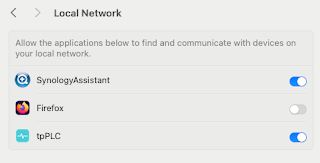
Note to self - Firefox and local connections
Whilst trying to hit my NAS from Firefox on my Mac, I kept seeing errors such as:- Unable to connect Firefox can’t establish a connection t...
-
Error "ldap_sasl_interactive_bind_s: Unknown authentication method (-6)" on a LDAPSearch command ...Whilst building my mega Connections / Domino / Portal / Quickr / Sametime / WCM environment recently, I was using the LDAPSearch command tha...
-
I've just spent ~1 hour trying to get a pair of Powerline adapters to .... pair. This involved pressing a "Pair" button on one...
-
As per previous posts, I'm continuing to enjoy the voyage of discovery that is IBM API Connect (APIC) and IBM DataPower Gateway (IDG). T...