Tuesday, 10 August 2010

VMware Ate My Keyboard

Just hit an interesting little problem ( aka bug or feature ) in VMware Workstation 7.1.0 build 261024 running under Ubuntu 10.0.4 on a Thinkpad W500.

For no apparent reason, the so-called special modifier keys ( Ctrl, Shift etc. ) stopped working in the host OS, even though they continued working within a running VM ( Red Hat Enterprise Linux 5.5, in case it helps ).

The symptoms included the inability to use [Shift] to achieve CAPITALS or get special characters such as currency ( £, $ ), punctuation symbols ( !, ? ) etc.

This made life somewhat difficult for me.

As always, Google had the answer, Google is my friend, with this old post from 2008: -
Workstation 6 + Xorg 7.3 - keyboard issues
http://ubuntuforums.org/showthread.php?p=4990785#post4990785

which directs one to run the command /usr/bin/setxkbmap - no parameters etc. needed.

That was all I needed to do - the special modifier keys burst back into life, and I didn't have to "turn it off and on again"

Roy: [answers phone] Hello, IT. Have you tried turning it off and on again? ... OK, well, the button on the side. Is it glowing? ... Yeah, you need to turn it on. Err, the button turns it on. Yeah, you do know how a button works, don't you? No, not on clothes.
[Moss's phone rings. He answers it.]
Moss: Hello IT. Yuhuh. Have you tried forcing an unexpected reboot?
Roy: No, there you go, I just heard it come on. No, that's the music you hear when it comes on. No, that's the music you hear when... I'm sorry, are you from the past?
Moss: You see the driver hooks a function by patching the system call table so it's not safe to unload it unless another thread is going to jump in there and do its stuff and you don't want to end up in the middle of invalid memory... Hello?


http://en.wikiquote.org/wiki/The_IT_Crowd

Saturday, 7 August 2010

Interesting "feature" using external USB drives with Ubuntu

This morning, I raised my first ever bug report for Ubuntu on the excellent Launchpad site: -


as follows: -

------------------------------------------------------------------------------------------------------------------------------------------------------------------------------------------------------------------
I have the following entry in /etc/fstab: -

/dev/sdb2               /home/hayd/lenovo               hfsplus rw,auto,exec,user

relating to an external USB drive.

During boot-up of the previous 2.6.32-23-generic-pae kernel, I am prompted with the following message: -

The disk drive for /home/hayd/lenovo is not ready yet or not present
Continue to wait; or press S to skip mounting or M for manual recovery


which is precisely as one would expect.

However, following a recent upgrade to 2.6.32-24-generic-pae, this message is no longer displayed; instead, I am presented with a completely blank screen.

Having used the GRUB2 menu ( via the [Shift] key ) to boot back to the -23 kernel, I realised: -

(a) what the problem is
(b) how to overcome it - by pressing the [S] key to skip the auto-mount.

Therefore, I'm now able to boot -24 and get past the exception, by hitting [S], but the message should be displayed in clear text.

It's my view that this is a bug introduced by the kernel update.

Hardware

Lenovo Thinkpad W500 ( 4061-BL5 )
AMD/ATI Radeo graphics ( via i915 open-source driver )
Gnome 2.30.02

OS

Ubuntu 10.04.1 LTS
------------------------------------------------------------------------------------------------------------------------------------------------------------------------------------------------------------------

Will be interested to see whether (a) I can reproduce this on other hardware and (b) whether others have the same problem.

Friday, 6 August 2010

Installing Tivoli Directory Integrator 6.1.1 Fixpacks ...

This is purely an aide memoire, to save me having to look it up each time; in order to install a fix pack onto TDI 6.1.1 using the GUI, run the following command ( as root ): -

/usr/ibm/common/ci/gmi/bin/gmi

I've never been too sure why I see the exception: -

Error in copying /tmp/ismp001/8229657/data/a7390f9ecf6457bf3713f951c90b1bdb/1.0.0.0/resource.map  there may not be enough space on device

and: -

java.io.IOException: File does not exist: /usr/ibm/common/acsi/jre/lib/ext/svcdump.jar
        at com.installshield.boot.streamhandler.ISMPFileURLStreamHandler.openConnection(Unknown Source)
        at java.net.URL.openConnection(URL.java:925)
        at sun.net.www.protocol.jar.JarURLConnection.<init>(JarURLConnection.java:91)
        at sun.net.www.protocol.jar.Handler.openConnection(Handler.java:41)
        at java.net.URL.openConnection(URL.java:925)
        at sun.misc.URLClassPath$JarLoader.getJarFile(URLClassPath.java:644)
        at sun.misc.URLClassPath$JarLoader.<init>(URLClassPath.java:609)
        at sun.misc.URLClassPath$3.run(URLClassPath.java:387)
        at java.security.AccessController.doPrivileged1(Native Method)
        at java.security.AccessController.doPrivileged(AccessController.java:351)
        at sun.misc.URLClassPath.getLoader(URLClassPath.java(Inlined Compiled Code))
        at sun.misc.URLClassPath.getLoader(URLClassPath.java(Compiled Code))
        at sun.misc.URLClassPath.getResource(URLClassPath.java(Compiled Code))
        at java.net.URLClassLoader$ClassFinder.run(URLClassLoader.java(Compiled Code))
        at java.security.AccessController.doPrivileged1(Native Method)
        at java.security.AccessController.doPrivileged(AccessController.java(Compiled Code))
        at java.net.URLClassLoader.findClass(URLClassLoader.java(Compiled Code))
        at java.lang.ClassLoader.loadClass(ClassLoader.java(Compiled Code))
        at java.lang.ClassLoader.loadClass(ClassLoader.java:502)
        at java.util.ResourceBundle.loadBundle(ResourceBundle.java:1030)
        at java.util.ResourceBundle.findBundle(ResourceBundle.java:907)
        at java.util.ResourceBundle.getBundleImpl(ResourceBundle.java:732)
        at java.util.ResourceBundle.getBundle(ResourceBundle.java:532)
        at com.installshield.util.LocalizedStringResolver.resolve(Unknown Source)
        at com.installshield.util.LocalizedStringResolver.resolve(Unknown Source)
        at com.ibm.ci.gmi.util.GmiConfig.setGmiDefaults(GmiConfig.java:147)
        at com.ibm.ci.gmi.util.GmiConfig.getConfig(GmiConfig.java:97)
        at com.ibm.ci.gmi.issi.commandline.InitializeGmi.initializeLogging(InitializeGmi.java:102)
        at com.ibm.ci.gmi.issi.commandline.InitializeGmi.execute(InitializeGmi.java:85)
        at com.installshield.wizard.Wizard.executeStartupBeans(Unknown Source)
        at com.installshield.wizard.Wizard.startup(Unknown Source)
        at com.installshield.boot.BootMain.bootstart(Unknown Source)
        at com.installshield.boot.BootMain.executeBoot(Unknown Source)
        at com.installshield.boot.si.SIBootMain.run(Unknown Source)
        at java.lang.Thread.run(Thread.java:570)

but it appears to work.

It's also worth noting that I see a "Sign On to the Server" dialogue box three times; this is spookily reminiscent of the dialogue boxes that I used to see when installing WebSphere Application Server on OS/400 back in the day but .... clicking 'Cancel' gets rid of the box, and TDI seems none the worse.

Final point, running: -

/usr/ibm/common/ci/gmi/bin/gmi -help

returns: -

Update Installer Command Line Options:

-help
Displays a list of available command line options.

-version
Displays the Update Installer version.

-console
Runs Update Installer in console mode.  This option suppresses the graphical user
interface.

-record <response-file>
Creates a response file containing options for running Update Installer in silent mode.

-silent -options <response-file>
Runs Update Installer in silent mode.  A response file, previously created with the
-record option, can be used to specify the actions to be performed by Update Installer.

-uninstall
Runs Update Installer in uninstall mode.  Maintenance is removed by Update Installer.

-uuid <uuid>
Identifies the 32-character UUID of the offering that will be updated by Update Installer.
If more than one instance of the offering is installed, the -discriminant
option is required.

-discriminant <discriminant>
Identifies the discriminant that uniquely identifies an installed instance
of the offering to Solution Install.

-mdvFile <mdv-file-list>
Identifies one or more maintenance package, separated by
spaces, to be installed or uninstalled by Update Installer.
This option may only be used with the -silent option.

-fixName <IU-name-list>
Identifies one or more IU fix names, separated by spaces, to be uninstalled.
This option may only be used with the -silent option.

-updateVersion <update-version>
Identifies the version of an update to be uninstalled.
This option may only be used with the -silent option.

For more information, see the Update Installer User's Guide.

which is rather handy.

Thursday, 5 August 2010

Extend WebSphere Portal WCM Seedlist with Custom Metadata

Whilst researching for a project on which I'm currently engaged, I found this potentially quite useful document up on the most excellent WebSphere Portal Wiki.

I'll be reading it further, and also discussing with my development colleague, Brian, but it looks rather relevant: -

WCM Seedlist is the output format which is being used by WebSphere Portal to crawl and index WCM content. WCM Seedlist is based on the seedlist framework for seedlist v1.0. This is an ATOM feed based format. It doesn't only list links, but also provides additional metadata (author, category, publish date, access rights etc.). It furthermore tells the crawler how to handle the currently processed link: add to index, remove from index, update in index etc.

This article describes how to extend the WCM Seedlist which is consumed by search crawlers like PSE, Omnifind, Google [EITAN: Is that true that google can crawl Seedlist? ]  etc. You learn how to enrich the provided metadata with your own custom metadata: update, delete or add new values. The idea is to use the custom metadata in extended search queries to provide better or specific search results
.

For more information, go check out the article - Extend WebSphere Portal WCM Seedlist with Custom Metadata

An interesting change looks to be coming with Lotus Web Content Management 7

According to the folks who really should know, the Australia Development Lab, the next release of WCM will have the capability to create a Content Library with a number of default items. To quote from their blog: -

<snip>
A new option ("Include default items in the new library") has been added when creating a new WCM library. When selected the new library will be pre-populated with a basic set of items. This helps avoid the some what tedious initial setup steps needed to get WCM going (e.g. Create a Workflow, but need stages... that need actions etc etc etc). 

...
The default items include:
  • Workflow Actions (Publish and Expire)
  • Workflow stages (3 of them)
  • Workfow (An express and a 3 stage workflow)
  • Authoring and corresponding Presentation template
  • Components (A menu and authoring tools component)
  • 1 Site area and 2 sample content items
The default items are a simple but effective starting point for a new library. Those new to the product get a working site they can experiment with, and experienced users avoid needing to create the base set of workflow actions every time they start with a fresh WCM :-)... pick and choose what you want to keep and delete the rest.
</snip>

Should be interesting .....

Tuesday, 3 August 2010

*UPDATED* IBM Lotus Connections 2.5 Portlets for IBM WebSphere Portal

This had completely passed me by, but the Lotus Connections 2.5 portlets posted into the Catalog earlier this year have been updated recently ( July 20 ) to include better support for Profiles, as well as tag clouds.

The IBM Lotus Connections 2.5 Portlets for WebSphere Portal delivers the Lotus Connections rich set of social software services for use within a WebSphere Portal environment. WebSphere Portal users can integrate the Activities, Blogs, Bookmarks, and Profiles applications of Lotus Connections to:

  • Create and work with Lotus Connections Activities within WebSphere Portal. Users can easily set prioritization, Activity status and to do items for their Activities. Also, users have the ability to manage the membership to add and leverage the expertise and experience of others in the organization by working together.
  • Within WebSphere Portal users can view and create Lotus Connections Blog postings and comments.
  • Easily create, edit and discover Bookmarks in Lotus Connections that have been qualified by others with similar interests and expertise.
  • Search a directory of colleagues you can use to build a network and locate expertise. Update and comment on Status Updates from your network.
  • Incorporate meaningful keywords to find associated content and filter the items in other Lotus Connections portlets.

The Lotus Connections portlets support Lotus Connections 2.5 and WebSphere Portal 6.1.5.


July 20, 2010:  IBM has posted an updated package to the catalog containing new Profiles and Tag Cloud portlets, as well as updates to the other portlets.

So, on your marks, get set, start your downloads .....

Book To Be Reviewed - Application Development for IBM WebSphere Process Server 7 and Enterprise Service Bus 7

After a few weeks of waiting for Postman Pat, I'm pleased to report that my review copy of Packt Publishing's latest tome has arrived.

Having just reached the end of Stieg Larrson's excellent Dragon Tattoo series of novels, this is the next on my reading list, so I'll report back shortly.

On a semi-related note, I'm looking at a project at present using WebSphere Process Server and WebSphere Portal, so this is very timely. I'm also starting to look at WebSphere Lombardi Edition, as an aside, so the world is very very bright.  Watch this space ...

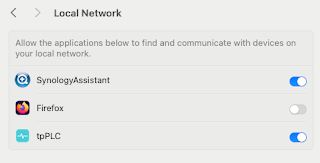
Note to self - Firefox and local connections

 Whilst trying to hit my NAS from Firefox on my Mac, I kept seeing errors such as:- Unable to connect Firefox can’t establish a connection t...