An interesting blog post from Lauren Wendel covering the new Mobile Portal Accelerator: -
<snip>
Our team is often asked how to approach developing the mobile versions of web content pages. How to begin and what needs to be considered and prioritized as you go? Once you determine which mobile devices you will need to support (if you need to support one or two devices that your organization has standardized on, developing a mobile portal page using a development tool such as Rational Application Developer or Portlet Factory may be a great option for your organization). Several useful mobile application examples are available from the engineering team, located in the WebSphere Portlet Factory wiki, http://www-10.lotus.com/ldd/pfwiki.nsf/xpViewRecent.xsp?searchValue=mobile. Other organizations realize they will need to support more than three mobile devices (and their updates) and may choose a multi-channel server option, such as Mobile Portal Accelerator, to help automate mobile portal development and display optimization for thousands of in-market devices, and their updates in the future. We've worked with a number of organizations worldwide that have saved development and code maintenance costs using this approach. A demonstration of the power of Mobile Portal Accelerator to optimize content for virtually all mobile devices in -market can be viewed here on an IBM "Demonet" server: http://mpademo.net:10040/wps/portal (you can check this out with your own mobile device)!
</snip>
https://www.ibm.com/developerworks/mydeveloperworks/blogs/WebSpherePortal/entry/best_practices_for_designing_mobile_portal_pages_for_multiple_mobile_devices27?lang=en_us
including a link to the MPA demo -> http://mpademo.net:10040/wps/portal <- which looks pretty good on my BlackBerry 8310 Curve and Apple iPod Touch .....
Tuesday, 28 September 2010

Monday, 27 September 2010
WebSphere Portal v7 - Clustering
This goes into the pile of things that I haven't yet tried, but soon will.
Hunter Tweed has followed up his most excellent WebSphere Portal 6.1.5 clustering guide with an updated version for the newly released WebSphere Portal 7 product.
Want to download and read ?
In that case, navigate over to the WebSphere Portal Wiki: -
Included in the attached PDF are the steps necessary to build a two-node WebSphere Portal v7.0.0 cluster running on WebSphere Application Server v7.0.0.11. This also includes configuration to an external database, a Lightweight Directory Access Protocol (LDAP) user registry, and a remote Web server.
http://www-10.lotus.com/ldd/portalwiki.nsf/dx/Step-by-Step_Cluster_Guide_for_IBM_WebSphere_Portal_v7.0.0
Hunter Tweed has followed up his most excellent WebSphere Portal 6.1.5 clustering guide with an updated version for the newly released WebSphere Portal 7 product.
Want to download and read ?
In that case, navigate over to the WebSphere Portal Wiki: -
Included in the attached PDF are the steps necessary to build a two-node WebSphere Portal v7.0.0 cluster running on WebSphere Application Server v7.0.0.11. This also includes configuration to an external database, a Lightweight Directory Access Protocol (LDAP) user registry, and a remote Web server.
http://www-10.lotus.com/ldd/portalwiki.nsf/dx/Step-by-Step_Cluster_Guide_for_IBM_WebSphere_Portal_v7.0.0
Thursday, 23 September 2010
Installing Ubuntu Linux 10.04 on an IBM Thinkpad R50e
Just going through a clean installation of Ubuntu 10.04 Lucid Lynx on my beloved's old-but-still-good Thinkpad, and immediately hit a problem whereby the display would go blank as soon it had finished booting from the DVD, either into Live CD mode or into Installation mode.
However, after a quick Google search, I stumbled upon this article Ubuntu 10.04 “Lucid” Blank Screen at Startup : Workaround which reports a similar problem, albeit post installation, and solution, which involves editing the GRUB loader: -
Booting from CD
This section outlines how to workaround the video issue while booting from the CD. Your mileage may vary, depending on your video card, but hopefully this steers you in the right direction:
The suggested options that I have found are hardware specific. Here is a list:
Hopefully one of these options will get you up and running. Keep reading now to make these changes persistent!
For me, the "secret sauce" was to use the i915.modeset=1 switch, having removed quiet and splash.
The installation started, and is running at 93% as I type. I may have to revisit this post-installation, to make the changes to GRUB permanently.
For the record, the machine is a 1834-BYG as per the IBM support site here: -
http://www-307.ibm.com/pc/support/site.wss/quickPath.do?quickPathEntry=1834BYG
and the graphics card is an Intel Extreme.
:-)
However, after a quick Google search, I stumbled upon this article Ubuntu 10.04 “Lucid” Blank Screen at Startup : Workaround which reports a similar problem, albeit post installation, and solution, which involves editing the GRUB loader: -
Booting from CD
This section outlines how to workaround the video issue while booting from the CD. Your mileage may vary, depending on your video card, but hopefully this steers you in the right direction:
- At the install screen press ‘F6‘ and insert one of the options below, depending on your hardware.
- On first boot after install, press e to edit the GRUB menu.
- Using the arrow keys to navigate, delete quiet and splash and again insert one of the options below.
- Press Ctrl and X to boot.
The suggested options that I have found are hardware specific. Here is a list:
- Older Intel video card: i915.modeset=1 or i915.modeset=0
- nVidia: nomodeset
- Generic: xforcevesa
Hopefully one of these options will get you up and running. Keep reading now to make these changes persistent!
For me, the "secret sauce" was to use the i915.modeset=1 switch, having removed quiet and splash.
The installation started, and is running at 93% as I type. I may have to revisit this post-installation, to make the changes to GRUB permanently.
For the record, the machine is a 1834-BYG as per the IBM support site here: -
http://www-307.ibm.com/pc/support/site.wss/quickPath.do?quickPathEntry=1834BYG
and the graphics card is an Intel Extreme.
:-)
WebSphere Portal v7 and the Web Application Integrator portlet - no success thus far
Continuing my exploration of the newly released WebSphere Portal v7, I thought I'd see whether I could get the Web Application Integrator portlet to work.
Now before I start, it's worth remembering that, currently, WAI is only supported with WebSphere Portal 6.1.0.4 and below - it's not yet been updated to support v7.
It started well; I expanded the ZIP: -
-rwxrwxrwx 1 1000 1000 231572 Jan 13 2009 webappintegrator_for_Portal_6_1.ZIP
into /root on my portal server, copied the ConfigEngine script: -
-rw-r--r-- 1 root root 2763 Feb 20 2008 /root/wai_install/deployWebAppIntegrator.xml
into the appropriate directory: -
/opt/IBM/WebSphere/AppServer/profiles/wp_profile/ConfigEngine/config/includes/
and then installed it using ConfigEngine: -
cd /opt/IBM/WebSphere/AppServer/profiles/wp_profile/ConfigEngine
./ConfigEngine.sh -DWasPassword=passw0rd -DPortalAdminPwd=passw0rd -DWebAppIntegratorLocation=/root/wai_install/
When I logged back into WebSphere Portal, and navigated to Administration -> Manage Pages, I was sad to see that the normal WAI user interface did not appear in its normal place under the Manage Pages portlet.
Recalling a recent conversation with a colleague about WAI and Virtual Portals, and referencing an older blog post of mine, I tried an alternate angle of attack; using XMLAccess to deploy it to the appropriate pages: -
cd /opt/IBM/WebSphere/AppServer/profiles/wp_profile/PortalServer/bin/
./xmlaccess.sh -in /root/wai_install/addWAItoManagePages.xml -user padmin -password passw0rd -url http://localhost:10039/wps/config
This initially failed, because the XMLAccess script couldn't find the WAR file :-
...
<message id="EJPXA0107E">com.ibm.wps.command.xml.XmlCommandException: EJPXA0107E: The resource for the URL file:////opt/IBM/WebSphere/PortalServer/installableApps/WebAppIntegrator.war could not be read. [web-app uid=webappintegrator.WebAppIntegratorPortlet.dbcf144b21.webmod]</message>
<message>java.io.FileNotFoundException: /opt/IBM/WebSphere/PortalServer/installableApps/WebAppIntegrator.war (No such file or directory)</message>
...
so, approaching desperation, I manually copied the WAR file, WebAppIntegrator.war, from /root/wai_install to /opt/IBM/WebSphere/PortalServer/installableApps.
I then re-ran the same XMLAccess command, which completed normally: -
<status element="all" result="ok"/>
and, joy of joy, the WAI UI appeared in its rightful place under the Manage Pages portlet.
Sadly, when I attempted to generate the JavaScript that I'd normally insert into my to-be-integrated page, I was instead redirected an error page, containing: -
Error 500: java.lang.NoSuchFieldError: com/ibm/wps/state/accessors/url/URLContextConstants.FORCE_ABSOLUTE_URLS
Ah, well, I did try.
As I mentioned, WAI is not (yet) supported under WebSphere Portal 7 - I'll endeavour to find out if/when, and report back.
*UPDATE 24/11/2010* I've now learned that Web Application Integrator for WP7 will shortly be made available via the Catalog. I've tested it internally, and it works as one would expect.
Now before I start, it's worth remembering that, currently, WAI is only supported with WebSphere Portal 6.1.0.4 and below - it's not yet been updated to support v7.
It started well; I expanded the ZIP: -
-rwxrwxrwx 1 1000 1000 231572 Jan 13 2009 webappintegrator_for_Portal_6_1.ZIP
into /root on my portal server, copied the ConfigEngine script: -
-rw-r--r-- 1 root root 2763 Feb 20 2008 /root/wai_install/deployWebAppIntegrator.xml
into the appropriate directory: -
/opt/IBM/WebSphere/AppServer/profiles/wp_profile/ConfigEngine/config/includes/
and then installed it using ConfigEngine: -
cd /opt/IBM/WebSphere/AppServer/profiles/wp_profile/ConfigEngine
./ConfigEngine.sh -DWasPassword=passw0rd -DPortalAdminPwd=passw0rd -DWebAppIntegratorLocation=/root/wai_install/
When I logged back into WebSphere Portal, and navigated to Administration -> Manage Pages, I was sad to see that the normal WAI user interface did not appear in its normal place under the Manage Pages portlet.
Recalling a recent conversation with a colleague about WAI and Virtual Portals, and referencing an older blog post of mine, I tried an alternate angle of attack; using XMLAccess to deploy it to the appropriate pages: -
cd /opt/IBM/WebSphere/AppServer/profiles/wp_profile/PortalServer/bin/
./xmlaccess.sh -in /root/wai_install/addWAItoManagePages.xml -user padmin -password passw0rd -url http://localhost:10039/wps/config
This initially failed, because the XMLAccess script couldn't find the WAR file :-
...
<message id="EJPXA0107E">com.ibm.wps.command.xml.XmlCommandException: EJPXA0107E: The resource for the URL file:////opt/IBM/WebSphere/PortalServer/installableApps/WebAppIntegrator.war could not be read. [web-app uid=webappintegrator.WebAppIntegratorPortlet.dbcf144b21.webmod]</message>
<message>java.io.FileNotFoundException: /opt/IBM/WebSphere/PortalServer/installableApps/WebAppIntegrator.war (No such file or directory)</message>
...
so, approaching desperation, I manually copied the WAR file, WebAppIntegrator.war, from /root/wai_install to /opt/IBM/WebSphere/PortalServer/installableApps.
I then re-ran the same XMLAccess command, which completed normally: -
<status element="all" result="ok"/>
and, joy of joy, the WAI UI appeared in its rightful place under the Manage Pages portlet.
Sadly, when I attempted to generate the JavaScript that I'd normally insert into my to-be-integrated page, I was instead redirected an error page, containing: -
Error 500: java.lang.NoSuchFieldError: com/ibm/wps/state/accessors/url/URLContextConstants.FORCE_ABSOLUTE_URLS
Ah, well, I did try.
As I mentioned, WAI is not (yet) supported under WebSphere Portal 7 - I'll endeavour to find out if/when, and report back.
*UPDATE 24/11/2010* I've now learned that Web Application Integrator for WP7 will shortly be made available via the Catalog. I've tested it internally, and it works as one would expect.
Wednesday, 22 September 2010
Good Times with external USB drives on Ubuntu Linux 10.04
For a long while, I've been using a rather useful 320 GB USB drive from Lenovo, which has the added feature of security via a keycode entered on the device itself. Whilst I'm sure it's not totally hack-proof, it's good enough for my requirements.
A while back I did see an issue where Ubuntu would (correctly) throw up a message when I booted up because it was trying to automount the drive even though it wasn't connected. So far, so good, but my problem was that the error message was written in black text on a black background :-) I did report a bug via Launchpad, as per my previous post but haven't yet seen any response.
As long as I remember to hit the "S" key to skip past the error when I boot, I'm OK.
However, I have experienced another issue recently.
The drive is formatted using the Apple HFS/HFS+ format, which allows me to use it for read-only AND read-write under OSX and Ubuntu without needing to use the dreaded NTFS format.
Occasionally, when I try to write to the drive, I get the exception: -
Read-only file system
even though the drive is definitely mounted as read-write in /etc/fstab : -
/dev/sdb2 /home/hayd/lenovo hfsplus rw,auto,exec,user
and the mount point is definitely owned by my user ID: -
drwxrwxrwx 2 hayd hayd 4096 2010-08-05 16:27 lenovo
Following this thread led me to the solution, although I did go down a blind alley :-)
In the first instance, I thought that the drive might be using the Apple Journalling mechanism, which Ubuntu can't handle. Having mounted it up on my Macbook, I could see that this wasn't the case.
However, this section of the thread provided the answer: -
The Ubuntu kernel (at least as of Feisty) does have write support for non-journalled HFS+. If you've got a journalled HFS+ file system, you're out of luck.
Furthermore, the driver will refuse to mount the filesystem read/write if it was not cleanly unmounted (to prevent serious data corruption). If the drive is ever not cleanly unmounted, you'll need to run a filesystem checker/repairer on it before you'll be able to mount it read/write again. Unfortunately, the HFS+ filesystem checker isn't actually packaged for Ubuntu (or wasn't last time I checked). You can download and build the Apple tools -the howto I followed was on the Gentoo Wiki. You probably want to read that anyway, there's some good information there. You can ignore all the "adding kernel support" bits though - we've already got the kernel support.
I remembered that I'd previously removed the drive from my Thinkpad having suspended, rather than shut down, the OS, meaning that the drive was never cleanly unmounted.
I used the Ubuntu Disk Utility to check the file system on the relevant partition ( sdb2 ) on the drive, and then remounted it again, using the mount command.
This time, it mounted up in read-write mode, and I was able to create folders, copy files etc. to my heart's content.
Lovely
A while back I did see an issue where Ubuntu would (correctly) throw up a message when I booted up because it was trying to automount the drive even though it wasn't connected. So far, so good, but my problem was that the error message was written in black text on a black background :-) I did report a bug via Launchpad, as per my previous post but haven't yet seen any response.
As long as I remember to hit the "S" key to skip past the error when I boot, I'm OK.
However, I have experienced another issue recently.
The drive is formatted using the Apple HFS/HFS+ format, which allows me to use it for read-only AND read-write under OSX and Ubuntu without needing to use the dreaded NTFS format.
Occasionally, when I try to write to the drive, I get the exception: -
Read-only file system
even though the drive is definitely mounted as read-write in /etc/fstab : -
/dev/sdb2 /home/hayd/lenovo hfsplus rw,auto,exec,user
and the mount point is definitely owned by my user ID: -
drwxrwxrwx 2 hayd hayd 4096 2010-08-05 16:27 lenovo
Following this thread led me to the solution, although I did go down a blind alley :-)
In the first instance, I thought that the drive might be using the Apple Journalling mechanism, which Ubuntu can't handle. Having mounted it up on my Macbook, I could see that this wasn't the case.
However, this section of the thread provided the answer: -
The Ubuntu kernel (at least as of Feisty) does have write support for non-journalled HFS+. If you've got a journalled HFS+ file system, you're out of luck.
Furthermore, the driver will refuse to mount the filesystem read/write if it was not cleanly unmounted (to prevent serious data corruption). If the drive is ever not cleanly unmounted, you'll need to run a filesystem checker/repairer on it before you'll be able to mount it read/write again. Unfortunately, the HFS+ filesystem checker isn't actually packaged for Ubuntu (or wasn't last time I checked). You can download and build the Apple tools -the howto I followed was on the Gentoo Wiki. You probably want to read that anyway, there's some good information there. You can ignore all the "adding kernel support" bits though - we've already got the kernel support.
I remembered that I'd previously removed the drive from my Thinkpad having suspended, rather than shut down, the OS, meaning that the drive was never cleanly unmounted.
I used the Ubuntu Disk Utility to check the file system on the relevant partition ( sdb2 ) on the drive, and then remounted it again, using the mount command.
This time, it mounted up in read-write mode, and I was able to create folders, copy files etc. to my heart's content.
Lovely
Tuesday, 21 September 2010
WebSphere Portal Version 7 - my first few steps ...
Having had a massive download fest whilst I was on the IBM network a week or so back, I'm now the proud owner of two VMware images, one with WebSphere Portal Server 7 and the other with WebSphere Portal Express 7.
These are the images and the unpack scripts that I used for both: -
WebSphere Portal Server 7
IL-Setup CZLL2ML.zip
IL-1 CZLP0ML.tar
IL-2 CZLP6ML.tar
IL-3 CZLL5ML.zip
IL-4 CZLL8ML.zip
IL-5 CZLM1ML.zip
unpack.sh
mkdir /tmp/WP7
unzip CZLL2ML.zip -d /tmp/WP7/IL-Setup
mkdir /tmp/WP7/IL-1
tar xvf CZLP0ML.tar -C /tmp/WP7/IL-1
mkdir /tmp/WP7/IL-2
tar xvf CZLP6ML.tar -C /tmp/WP7/IL-2
unzip CZLL5ML.zip -d /tmp/WP7/IL-3
unzip CZLL8ML.zip -d /tmp/WP7/IL-4
unzip CZLM1ML.zip -d /tmp/WP7/IL-5
Download Document
http://www-01.ibm.com/support/docview.wss?uid=swg24026527
WebSphere Portal Express 7
IL-Setup CZLL3ML.zip
IL-1 CZLP0ML.tar
IL-3 CZLR2ML.zip
IL-4 CZLL6ML.zip
IL-5 CZLL9ML.zip
IL-6 CZLM2ML.zip
Note that there is no IL-2 as Express doesn't support a 64-bit WAS, unlike Server
unpack.sh
mkdir /tmp/WPX7
unzip CZLL3ML.zip -d /tmp/WPX7/IL-Setup
mkdir /tmp/WPX7/IL-1
tar xvf CZLP0ML.tar -C /tmp/WPX7/IL-1
unzip CZLR2ML.zip -d /tmp/WPX7/IL-3
unzip CZLL6ML.zip -d /tmp/WPX7/IL-4
unzip CZLL9ML.zip -d /tmp/WPX7/IL-5
unzip CZLM2ML.zip -d /tmp/WPX7/IL-6
Download Document
http://www-01.ibm.com/support/docview.wss?uid=swg24026542
At present, I'm playing with the Express variant, partly because it also includes Lotus Web Content Management 7, which has a rather nice make-over to the authoring environment etc.
One thing that I'd noticed that, unlike previous versions, the wp_profile directory is no longer automatically placed under /opt/IBM/WebSphere, but is instead under /opt/IBM/WebSphere/AppServer/profiles which brings the product into line with other non-Express installations.
As part of my exploration, I am looking at the options to integrate iWidgets and portlets onto the same page.
To begin with, I went looking for the My Mashups page in the navigation, and was surprised to find it absent - when I thought back, I realised that it might not yet have been enabled, especially considering an earlier blog post that I had written re adding and removing Mashups etc. i WebSphere Portal Server.
Therefore, I needed to run the following ConfigEngine script: -
cd /opt/IBM/WebSphere/AppServer/profiles/wp_profile/ConfigEngine
./ConfigEngine.sh deploy-portal-mashup-ui
as detailed in the Wiki here: -
IBM WebSphere Portal Express 7 Product Documentation > Installing on Linux: exp7
Having done that, I now have access to the My Mashups page, and was able to create a model in WebSphere Portlet Factory Designer, deploy it as portlet AND as an iWidget, and then add BOTH portlets and iWidgets to the same page.
I'm still testing the water here, but v7 looks to be a very very nice release.
:-)
In other news, I'm very pleased to report that the newly released WebSphere Portlet Factory Designer now supports Open Document Format (ODF) ... specifically, the old Excel Import and Excel Export builders have been replaced by Spreadsheet Import and Spreadsheet Export builders, which support XLS *AND* ODS. This makes my demos far far easier ....
These are the images and the unpack scripts that I used for both: -
WebSphere Portal Server 7
IL-Setup CZLL2ML.zip
IL-1 CZLP0ML.tar
IL-2 CZLP6ML.tar
IL-3 CZLL5ML.zip
IL-4 CZLL8ML.zip
IL-5 CZLM1ML.zip
unpack.sh
mkdir /tmp/WP7
unzip CZLL2ML.zip -d /tmp/WP7/IL-Setup
mkdir /tmp/WP7/IL-1
tar xvf CZLP0ML.tar -C /tmp/WP7/IL-1
mkdir /tmp/WP7/IL-2
tar xvf CZLP6ML.tar -C /tmp/WP7/IL-2
unzip CZLL5ML.zip -d /tmp/WP7/IL-3
unzip CZLL8ML.zip -d /tmp/WP7/IL-4
unzip CZLM1ML.zip -d /tmp/WP7/IL-5
Download Document
http://www-01.ibm.com/support/docview.wss?uid=swg24026527
WebSphere Portal Express 7
IL-Setup CZLL3ML.zip
IL-1 CZLP0ML.tar
IL-3 CZLR2ML.zip
IL-4 CZLL6ML.zip
IL-5 CZLL9ML.zip
IL-6 CZLM2ML.zip
Note that there is no IL-2 as Express doesn't support a 64-bit WAS, unlike Server
unpack.sh
mkdir /tmp/WPX7
unzip CZLL3ML.zip -d /tmp/WPX7/IL-Setup
mkdir /tmp/WPX7/IL-1
tar xvf CZLP0ML.tar -C /tmp/WPX7/IL-1
unzip CZLR2ML.zip -d /tmp/WPX7/IL-3
unzip CZLL6ML.zip -d /tmp/WPX7/IL-4
unzip CZLL9ML.zip -d /tmp/WPX7/IL-5
unzip CZLM2ML.zip -d /tmp/WPX7/IL-6
Download Document
http://www-01.ibm.com/support/docview.wss?uid=swg24026542
At present, I'm playing with the Express variant, partly because it also includes Lotus Web Content Management 7, which has a rather nice make-over to the authoring environment etc.
One thing that I'd noticed that, unlike previous versions, the wp_profile directory is no longer automatically placed under /opt/IBM/WebSphere, but is instead under /opt/IBM/WebSphere/AppServer/profiles which brings the product into line with other non-Express installations.
As part of my exploration, I am looking at the options to integrate iWidgets and portlets onto the same page.
To begin with, I went looking for the My Mashups page in the navigation, and was surprised to find it absent - when I thought back, I realised that it might not yet have been enabled, especially considering an earlier blog post that I had written re adding and removing Mashups etc. i WebSphere Portal Server.
Therefore, I needed to run the following ConfigEngine script: -
cd /opt/IBM/WebSphere/AppServer/profiles/wp_profile/ConfigEngine
./ConfigEngine.sh deploy-portal-mashup-ui
as detailed in the Wiki here: -
IBM WebSphere Portal Express 7 Product Documentation > Installing on Linux: exp7
Having done that, I now have access to the My Mashups page, and was able to create a model in WebSphere Portlet Factory Designer, deploy it as portlet AND as an iWidget, and then add BOTH portlets and iWidgets to the same page.
I'm still testing the water here, but v7 looks to be a very very nice release.
:-)
In other news, I'm very pleased to report that the newly released WebSphere Portlet Factory Designer now supports Open Document Format (ODF) ... specifically, the old Excel Import and Excel Export builders have been replaced by Spreadsheet Import and Spreadsheet Export builders, which support XLS *AND* ODS. This makes my demos far far easier ....
Application Development for IBM WebSphere Process Server 7 and Enterprise Service Bus 7
I mentioned previously that I'm reviewing a second book from Packt Publishing, entitled Application Development for IBM WebSphere Process Server 7 and Enterprise Service Bus 7.
Well, I'm mid-way through the book, which has proved to be an excellent read thus far. Having reached Chapter 7, we're now starting to look at a hypothetical existing customer, JungleSea, and identify their business and IT problems/requirements with their existing sales order processing system, which ( as with many organisations ) is built in a "stove-pipe" fashion, with specific applications for each and every business function, many developed before the vision of Service Oriented Architecture was born.
Up until this point, we've really only scratched the surface of the capabilities of WebSphere Process Server (WPS) and WebSphere Enterprise Service Bus (WESB) with a focus on topics such as web services, Business Objects, mediation, service endpoints etc.
I'm enjoying the book immensely, especially given the fact that WPS/WESB are solutions with which I've not worked in "anger", but have seen in a number of my portal engagements over the past year or so.
I do have a few gripes, more with the presentation than with the content: -
So, I'm continuing to enjoy the read, and will report back once I've completed it.
It may be worth noting that I'm undertaking this read / review as a favour to Packt - they did provide me with a copy of the book, but that's all - my review is MY review, based upon my own observations, opinions and findings.
Whilst on the subject of Packt, it's worth noting that they also have an online digital book service called * PacktLib, which provides registered users with access to NINE books free-of-charge. Take a look ....
Well, I'm mid-way through the book, which has proved to be an excellent read thus far. Having reached Chapter 7, we're now starting to look at a hypothetical existing customer, JungleSea, and identify their business and IT problems/requirements with their existing sales order processing system, which ( as with many organisations ) is built in a "stove-pipe" fashion, with specific applications for each and every business function, many developed before the vision of Service Oriented Architecture was born.
Up until this point, we've really only scratched the surface of the capabilities of WebSphere Process Server (WPS) and WebSphere Enterprise Service Bus (WESB) with a focus on topics such as web services, Business Objects, mediation, service endpoints etc.
I'm enjoying the book immensely, especially given the fact that WPS/WESB are solutions with which I've not worked in "anger", but have seen in a number of my portal engagements over the past year or so.
I do have a few gripes, more with the presentation than with the content: -
- The English, whilst excellent, is somewhat overlong - I know that I'm often guilty of using 5 words when 1 word would do, but this book does suffer the same "problem". It's not a major problem, but it does nag at me from time to time
- There is some inconsistency in acronym expansion - early on, the authors use the terms WS-BPEL and BPEL interchangeably, and then indicate that they're going to use BPEL from that point on, and then switch back to WS-BPEL and so on. It may be as a result of having multiple authors, but again it's a niggle
- On occasion, the book provides instruction to do specific tasks in WebSphere Integration Developer (WID), but often skims over the detail - therefore, this book definitely wouldn't serve as one's only introduction to WID, WPS and WESB. However, this book would work extremely well, if read shortly after a developer had received formal training on the products
- The book is well stocked with pictures, both mindmaps and screenshots, but, and this is partly down to it's size/format, the pictures are often very, very small, making it hard to draw any detail from them - if I had my way, I'd have preferred the book to be printed in an A4 format, similar to the IBM Redbooks but .....
So, I'm continuing to enjoy the read, and will report back once I've completed it.
It may be worth noting that I'm undertaking this read / review as a favour to Packt - they did provide me with a copy of the book, but that's all - my review is MY review, based upon my own observations, opinions and findings.
Whilst on the subject of Packt, it's worth noting that they also have an online digital book service called * PacktLib, which provides registered users with access to NINE books free-of-charge. Take a look ....
Subscribe to:
Posts (Atom)
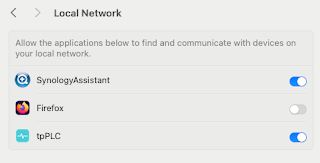
Note to self - Firefox and local connections
Whilst trying to hit my NAS from Firefox on my Mac, I kept seeing errors such as:- Unable to connect Firefox can’t establish a connection t...